
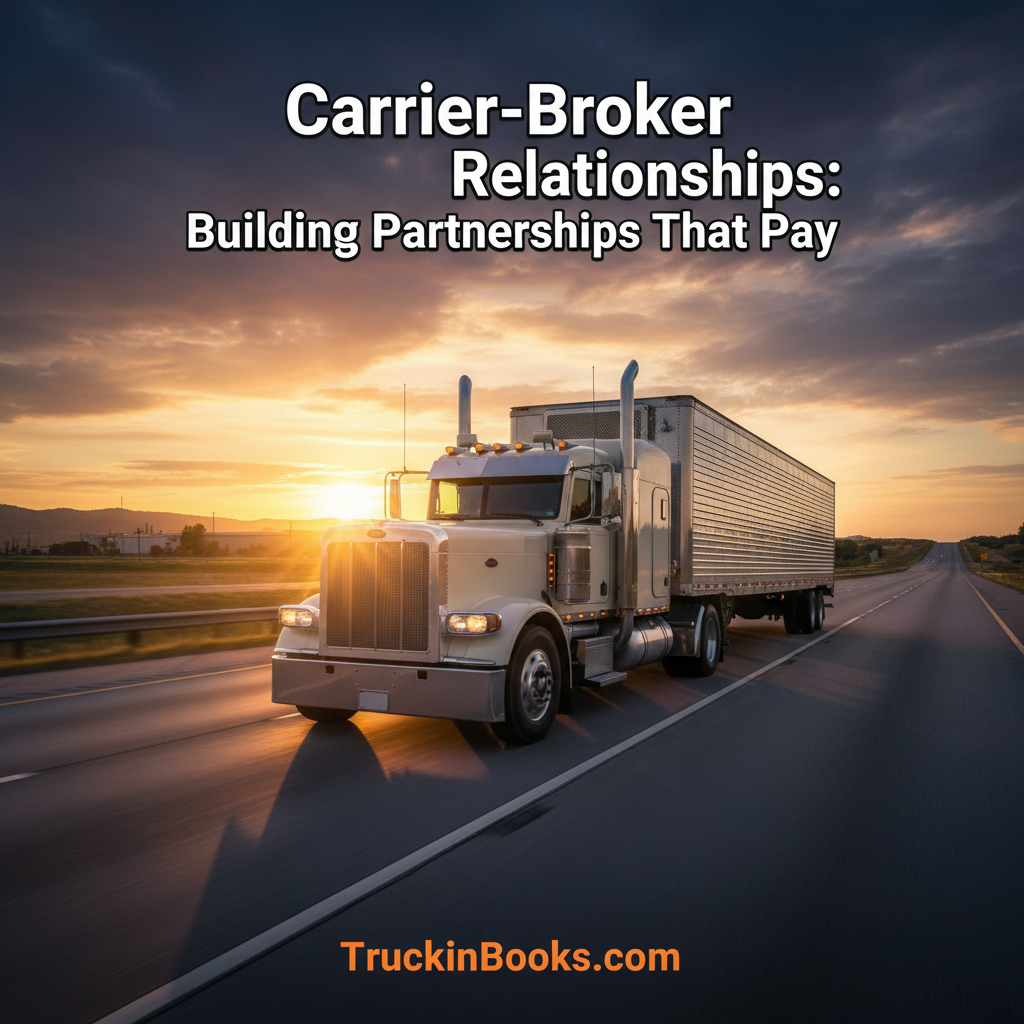
Protected
Freight Brokers & Load Boards
Carrier-Broker Relationships: Building Partnerships That Pay
Audio
DRM
By TruckinBooks
132 pages
0 min
Learn how to build strong, mutually beneficial relationships with freight brokers that lead to consistent freight and better rates.
About This Ebook
Carrier-Broker Relationships: Building Partnerships That Pay
Chapter 1: Understanding the Broker-Carrier Dynamic
The relationship between carriers and freight brokers forms the backbone of the American trucking industry. While this relationship is sometimes viewed as adversarial, the most successful participants understand that mutual benefit creates lasting partnerships. Brokers need reliable carriers to serve their customers, and carriers need brokers to provide consistent freight.
Brokers serve as intermediaries between shippers and carriers. They handle sales, customer service, and payment processing for shippers while finding and managing carriers to move freight. This intermediary role adds value when brokers efficiently match freight with appropriate carriers and manage the complexities of transportation logistics.
Understanding the broker's perspective helps carriers work more effectively with them. Brokers face pressure from shippers to provide reliable service at competitive rates. They must balance shipper demands with carrier needs while maintaining profitable margins. Carriers who help brokers succeed naturally become preferred partners.
Chapter 2: What Brokers Look for in Carriers
Reliability tops every broker's list of carrier requirements. Brokers stake their reputation on carrier performance. When a carrier fails to pick up on time, delivers late, or damages freight, the broker bears responsibility to the shipper. Carriers who consistently perform as promised become invaluable partners.
Communication ranks equally important. Brokers need to know load status to keep shippers informed. Carriers who proactively communicate, especially when problems arise, make brokers' jobs easier. A carrier who calls ahead about a potential delay is far more valuable than one who simply shows up late without warning.
Professional documentation and compliance matter significantly. Brokers must verify carrier authority, insurance, and safety records. Carriers who maintain current documentation and clean safety records reduce broker risk and administrative burden.
Chapter 3: Building Your Broker Network
Start building broker relationships strategically. Research brokers who handle freight in your preferred lanes and with your equipment type. Quality matters more than quantity. A few strong broker relationships often generate more consistent freight than dozens of superficial contacts.
Initial contact should demonstrate professionalism and value. When reaching out to new brokers, highlight your equipment, experience, and service capabilities. Provide complete documentation upfront to streamline the onboarding process.
Perform exceptionally on your first loads with any new broker. First impressions set the tone for the relationship. Go above and beyond on initial loads to establish yourself as a reliable partner worth developing.
Chapter 4: Communication Best Practices
Establish clear communication expectations from the start of each load. Confirm pickup and delivery appointments, special requirements, and preferred contact methods. Clarify who to contact for different situations.
Provide regular updates throughout each load. Many brokers appreciate check calls at pickup, during transit, and at delivery. Even when everything is going smoothly, brief updates reassure brokers and build confidence in your reliability.
When problems occur, communicate immediately. Delays, accidents, or other issues require prompt notification. Explain the situation clearly, provide your plan for resolution, and keep the broker updated as circumstances develop. How you handle problems often matters more than the problems themselves.
Chapter 5: Negotiating Rates Effectively
Rate negotiation is a normal part of the broker-carrier relationship. Approach negotiations professionally, focusing on mutual benefit rather than confrontation. Understand market conditions and have data to support your rate requests.
Build negotiating leverage through performance. Carriers with strong track records can often command better rates because brokers value reliability. Your reputation is an asset that supports rate negotiations.
Consider the total value of broker relationships, not just individual load rates. A broker who provides consistent freight, pays promptly, and treats you professionally may be worth accepting slightly lower rates compared to unreliable alternatives.
Chapter 6: Payment and Financial Considerations
Payment terms significantly impact carrier cash flow. Standard broker payment terms range from 15 to 45 days. Understand payment terms before accepting loads and factor them into your financial planning.
Quick pay options provide faster payment for a fee. Evaluate whether quick pay makes financial sense for your situation. For carriers with tight cash flow, the fee may be worthwhile. For those with adequate working capital, waiting for standard payment preserves more revenue.
Address payment issues promptly and professionally. If payment is delayed beyond agreed terms, contact the broker's accounting department. Document all communications and escalate appropriately if issues persist.
Chapter 7: Handling Disputes and Problems
Disputes occasionally arise in any business relationship. Approach disputes professionally, focusing on resolution rather than blame. Document your position clearly and provide supporting evidence.
Cargo claims require careful handling. Report any damage immediately and document thoroughly with photographs. Cooperate with the claims process while protecting your interests. Understand your liability limits and insurance coverage.
When relationships become problematic, evaluate whether they're worth continuing. Some broker relationships aren't worth the hassle, regardless of the freight they offer. Don't hesitate to end relationships that consistently cause problems.
Chapter 8: Becoming a Preferred Carrier
Preferred carrier status brings significant benefits. Preferred carriers often receive first call on desirable loads, better rates, and more flexible terms. Achieving this status requires consistent excellence over time.
Understand what specific brokers value most. Some prioritize on-time performance above all else. Others value communication or flexibility. Tailor your service to each broker's priorities.
Ask for feedback regularly. Understanding how brokers perceive your service helps you improve and demonstrates your commitment to the relationship. Act on feedback to show you value their input.
Chapter 9: Technology in Broker Relationships
Technology increasingly mediates broker-carrier interactions. Electronic load tendering, tracking systems, and digital documentation have become standard. Embrace these technologies to work efficiently with modern brokers.
Tracking requirements have become nearly universal. Ensure your tracking capabilities meet broker requirements. Many brokers require specific tracking integrations or apps. Compliance with tracking requirements is often non-negotiable.
Digital document exchange streamlines operations. Electronic bills of lading, rate confirmations, and proof of delivery reduce paperwork and speed payment processing. Adopt digital document practices to improve efficiency.
Chapter 10: Long-Term Partnership Development
Transform transactional relationships into true partnerships over time. Partnerships involve mutual commitment, shared goals, and collaborative problem-solving. These relationships provide stability and growth opportunities for both parties.
Invest in your best broker relationships. Prioritize their freight, provide exceptional service, and look for ways to add value beyond basic transportation. Strong partnerships often lead to growth opportunities as brokers expand their business.
Maintain professionalism even when relationships end. The trucking industry is smaller than it appears, and reputation matters. Part ways professionally, fulfill all commitments, and leave the door open for future opportunities.
Building strong broker relationships requires consistent effort and professional conduct. By focusing on reliability, communication, and mutual benefit, carriers can develop partnerships that provide consistent freight, fair rates, and long-term business stability.
Chapter 1: Understanding the Broker-Carrier Dynamic
The relationship between carriers and freight brokers forms the backbone of the American trucking industry. While this relationship is sometimes viewed as adversarial, the most successful participants understand that mutual benefit creates lasting partnerships. Brokers need reliable carriers to serve their customers, and carriers need brokers to provide consistent freight.
Brokers serve as intermediaries between shippers and carriers. They handle sales, customer service, and payment processing for shippers while finding and managing carriers to move freight. This intermediary role adds value when brokers efficiently match freight with appropriate carriers and manage the complexities of transportation logistics.
Understanding the broker's perspective helps carriers work more effectively with them. Brokers face pressure from shippers to provide reliable service at competitive rates. They must balance shipper demands with carrier needs while maintaining profitable margins. Carriers who help brokers succeed naturally become preferred partners.
Chapter 2: What Brokers Look for in Carriers
Reliability tops every broker's list of carrier requirements. Brokers stake their reputation on carrier performance. When a carrier fails to pick up on time, delivers late, or damages freight, the broker bears responsibility to the shipper. Carriers who consistently perform as promised become invaluable partners.
Communication ranks equally important. Brokers need to know load status to keep shippers informed. Carriers who proactively communicate, especially when problems arise, make brokers' jobs easier. A carrier who calls ahead about a potential delay is far more valuable than one who simply shows up late without warning.
Professional documentation and compliance matter significantly. Brokers must verify carrier authority, insurance, and safety records. Carriers who maintain current documentation and clean safety records reduce broker risk and administrative burden.
Chapter 3: Building Your Broker Network
Start building broker relationships strategically. Research brokers who handle freight in your preferred lanes and with your equipment type. Quality matters more than quantity. A few strong broker relationships often generate more consistent freight than dozens of superficial contacts.
Initial contact should demonstrate professionalism and value. When reaching out to new brokers, highlight your equipment, experience, and service capabilities. Provide complete documentation upfront to streamline the onboarding process.
Perform exceptionally on your first loads with any new broker. First impressions set the tone for the relationship. Go above and beyond on initial loads to establish yourself as a reliable partner worth developing.
Chapter 4: Communication Best Practices
Establish clear communication expectations from the start of each load. Confirm pickup and delivery appointments, special requirements, and preferred contact methods. Clarify who to contact for different situations.
Provide regular updates throughout each load. Many brokers appreciate check calls at pickup, during transit, and at delivery. Even when everything is going smoothly, brief updates reassure brokers and build confidence in your reliability.
When problems occur, communicate immediately. Delays, accidents, or other issues require prompt notification. Explain the situation clearly, provide your plan for resolution, and keep the broker updated as circumstances develop. How you handle problems often matters more than the problems themselves.
Chapter 5: Negotiating Rates Effectively
Rate negotiation is a normal part of the broker-carrier relationship. Approach negotiations professionally, focusing on mutual benefit rather than confrontation. Understand market conditions and have data to support your rate requests.
Build negotiating leverage through performance. Carriers with strong track records can often command better rates because brokers value reliability. Your reputation is an asset that supports rate negotiations.
Consider the total value of broker relationships, not just individual load rates. A broker who provides consistent freight, pays promptly, and treats you professionally may be worth accepting slightly lower rates compared to unreliable alternatives.
Chapter 6: Payment and Financial Considerations
Payment terms significantly impact carrier cash flow. Standard broker payment terms range from 15 to 45 days. Understand payment terms before accepting loads and factor them into your financial planning.
Quick pay options provide faster payment for a fee. Evaluate whether quick pay makes financial sense for your situation. For carriers with tight cash flow, the fee may be worthwhile. For those with adequate working capital, waiting for standard payment preserves more revenue.
Address payment issues promptly and professionally. If payment is delayed beyond agreed terms, contact the broker's accounting department. Document all communications and escalate appropriately if issues persist.
Chapter 7: Handling Disputes and Problems
Disputes occasionally arise in any business relationship. Approach disputes professionally, focusing on resolution rather than blame. Document your position clearly and provide supporting evidence.
Cargo claims require careful handling. Report any damage immediately and document thoroughly with photographs. Cooperate with the claims process while protecting your interests. Understand your liability limits and insurance coverage.
When relationships become problematic, evaluate whether they're worth continuing. Some broker relationships aren't worth the hassle, regardless of the freight they offer. Don't hesitate to end relationships that consistently cause problems.
Chapter 8: Becoming a Preferred Carrier
Preferred carrier status brings significant benefits. Preferred carriers often receive first call on desirable loads, better rates, and more flexible terms. Achieving this status requires consistent excellence over time.
Understand what specific brokers value most. Some prioritize on-time performance above all else. Others value communication or flexibility. Tailor your service to each broker's priorities.
Ask for feedback regularly. Understanding how brokers perceive your service helps you improve and demonstrates your commitment to the relationship. Act on feedback to show you value their input.
Chapter 9: Technology in Broker Relationships
Technology increasingly mediates broker-carrier interactions. Electronic load tendering, tracking systems, and digital documentation have become standard. Embrace these technologies to work efficiently with modern brokers.
Tracking requirements have become nearly universal. Ensure your tracking capabilities meet broker requirements. Many brokers require specific tracking integrations or apps. Compliance with tracking requirements is often non-negotiable.
Digital document exchange streamlines operations. Electronic bills of lading, rate confirmations, and proof of delivery reduce paperwork and speed payment processing. Adopt digital document practices to improve efficiency.
Chapter 10: Long-Term Partnership Development
Transform transactional relationships into true partnerships over time. Partnerships involve mutual commitment, shared goals, and collaborative problem-solving. These relationships provide stability and growth opportunities for both parties.
Invest in your best broker relationships. Prioritize their freight, provide exceptional service, and look for ways to add value beyond basic transportation. Strong partnerships often lead to growth opportunities as brokers expand their business.
Maintain professionalism even when relationships end. The trucking industry is smaller than it appears, and reputation matters. Part ways professionally, fulfill all commitments, and leave the door open for future opportunities.
Building strong broker relationships requires consistent effort and professional conduct. By focusing on reliability, communication, and mutual benefit, carriers can develop partnerships that provide consistent freight, fair rates, and long-term business stability.
Content Protection
This ebook is protected with DRM technology. View only through our secure web reader. No downloading or copying allowed to protect author rights.
Details
Format
Web Reader
Pages
132
Audio
0 min
Access
Lifetime
Related Ebooks



© 2026 TruckinBooks. All rights reserved.
Get Full Access to This Ebook
Unlock this ebook and 200+ more trucking industry resources with lifetime access. 30-day money-back guarantee.
Get Instant Access - $97