
Protected
CDL Grants & Financial Assistance
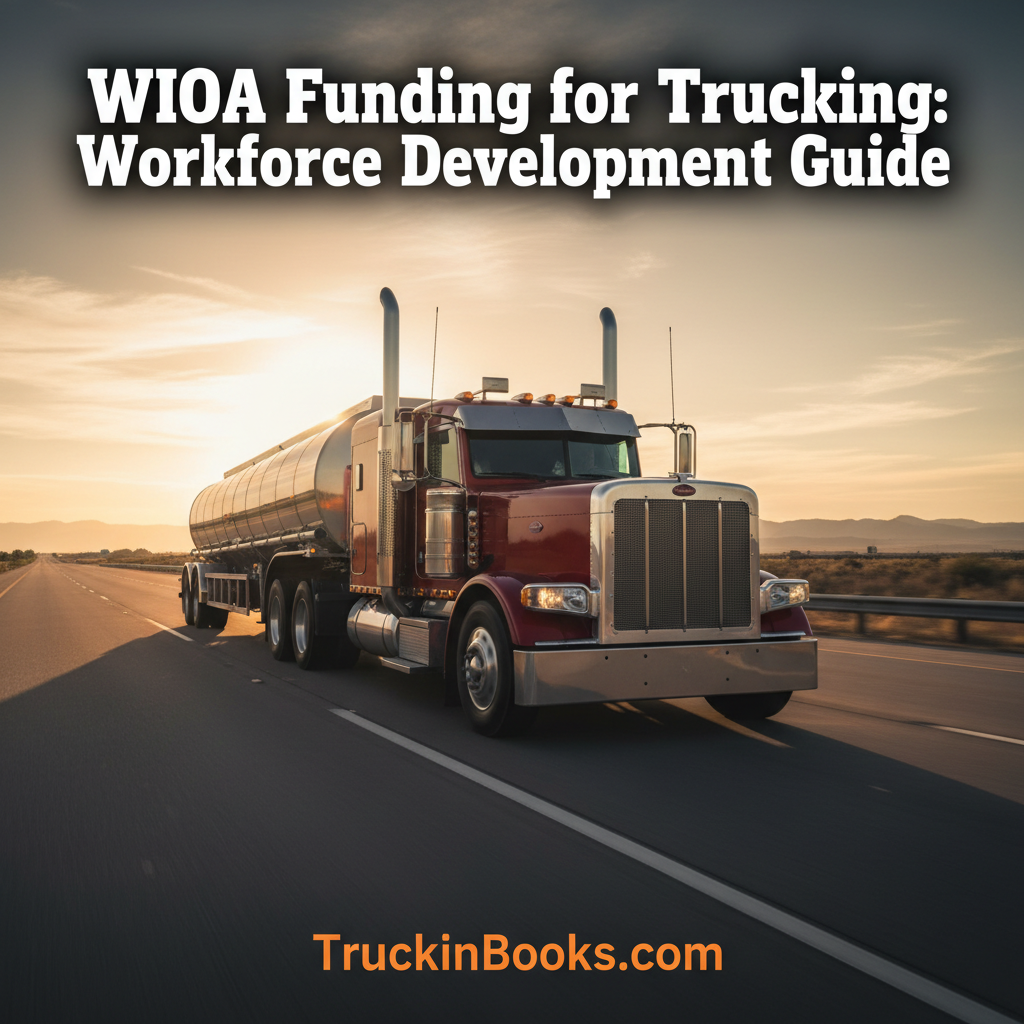
WIOA Funding for Trucking: Workforce Development Guide
Audio
DRM
By TruckinBooks
134 pages
0 min
Navigate the Workforce Innovation and Opportunity Act to secure funding for CDL training through your local American Job Center.
About This Ebook
WIOA Funding for Trucking: Workforce Development Guide
Chapter 1: Understanding WIOA
The Workforce Innovation and Opportunity Act (WIOA) is the primary federal workforce development legislation in the United States. Enacted in 2014, WIOA provides funding for job training programs that help Americans obtain skills needed for in-demand careers. CDL training is frequently funded through WIOA because trucking consistently ranks among occupations with significant job openings.
WIOA operates through a network of state and local workforce development boards. These boards receive federal funding and distribute it to eligible individuals for approved training programs. The system is designed to be responsive to local labor market needs, so trucking training is typically available in areas where driver demand exists.
Understanding how WIOA works helps you navigate the system effectively. While the process can seem bureaucratic, the potential reward of fully funded CDL training makes the effort worthwhile. This guide walks you through the WIOA system and how to access its benefits.
Chapter 2: The American Job Center Network
American Job Centers (AJCs), formerly known as One-Stop Career Centers, are the primary access points for WIOA services. These centers provide employment services, career counseling, and training program enrollment. Every state has AJCs, typically located in major population centers.
Finding your local AJC is the first step toward WIOA funding. The CareerOneStop website (careeronestop.org) provides a locator tool to find centers near you. You can also search for "American Job Center" plus your city or county name.
AJCs offer various services beyond training funding. Job search assistance, resume help, interview preparation, and labor market information are all available. Even if you don't qualify for training funds, these services can support your career transition.
Chapter 3: WIOA Eligibility Requirements
WIOA eligibility varies by program and local policy, but general requirements apply. Adult program eligibility requires being 18 or older and authorized to work in the United States. Additional criteria may include being unemployed, underemployed, or facing barriers to employment.
Priority of service provisions affect who receives funding when resources are limited. Veterans and eligible spouses receive first priority. After veterans, priority typically goes to recipients of public assistance, low-income individuals, and those who are basic skills deficient.
Dislocated worker programs serve those who lost jobs through no fault of their own, such as layoffs or plant closures. If you were recently laid off, you may qualify for dislocated worker services, which sometimes have more funding available than adult programs.
Chapter 4: The Application Process
Applying for WIOA funding begins with visiting your local AJC. Bring identification, proof of income, and any documentation of your employment situation. Be prepared to discuss your career goals and why trucking is an appropriate path for you.
Initial assessment determines your eligibility and service needs. Counselors evaluate your skills, experience, and barriers to employment. They also assess whether training is necessary for you to obtain employment or whether job search assistance alone might suffice.
If training is appropriate, you'll work with a counselor to develop an Individual Employment Plan (IEP). This plan documents your career goals, the training needed to achieve them, and the services you'll receive. The IEP guides your participation in WIOA programs.
Chapter 5: Eligible Training Provider Lists
WIOA funds can only be used at approved training providers listed on your state's Eligible Training Provider List (ETPL). CDL schools must apply for and maintain ETPL status to receive WIOA funding. Not all CDL schools are on the list.
Before committing to a specific school, verify its ETPL status. Your AJC counselor can help you identify approved CDL programs in your area. The state workforce agency website typically publishes the ETPL for public access.
ETPL requirements ensure training quality. Schools must demonstrate positive outcomes for students, including completion rates and employment rates. This vetting provides some assurance that approved programs deliver value.
Chapter 6: Individual Training Accounts
WIOA training funds are typically provided through Individual Training Accounts (ITAs). An ITA is essentially a voucher that pays for your training at an approved provider. The amount available varies by state and local area.
ITA amounts may or may not cover full training costs. Some areas provide generous funding that covers complete CDL programs. Others have caps that may leave you responsible for a portion of costs. Understand your ITA amount before enrolling.
ITAs provide consumer choice. You select your training provider from the ETPL rather than being assigned to a specific school. This choice allows you to consider factors like location, schedule, and program quality when selecting your training.
Chapter 7: Supportive Services
Beyond training funds, WIOA can provide supportive services that help you complete training successfully. Transportation assistance helps you get to and from training. Childcare assistance supports parents who need care for children during training hours.
Needs-related payments provide income support during training for those who qualify. These payments help cover living expenses when training prevents you from working. Eligibility requirements for needs-related payments are typically stricter than for training funds.
Other supportive services may include work-related tools and equipment, professional clothing for job interviews, and assistance with licensing and testing fees. Ask your counselor about all available supportive services.
Chapter 8: Working with Your Case Manager
Once enrolled in WIOA services, you'll be assigned a case manager who guides you through the process. Building a good relationship with your case manager improves your experience and outcomes. Communicate openly about your needs and any challenges you face.
Respond promptly to case manager requests. WIOA programs have documentation requirements, and delays in providing information can slow your progress. Keep copies of all documents you submit and maintain records of your interactions.
Report any changes in your situation immediately. Changes in income, employment status, or contact information affect your eligibility and services. Failing to report changes can result in problems with your funding.
Chapter 9: Completing Training Successfully
Once enrolled in CDL training, focus on successful completion. Attendance requirements are typically strict, and excessive absences can result in loss of funding. Treat training like a job, arriving on time and prepared every day.
Academic performance matters. While CDL training is practical, you must pass written tests and demonstrate skills proficiency. Study consistently and ask for help if you're struggling with any material.
Stay in contact with your case manager during training. Regular check-ins keep your case active and allow you to address any issues promptly. Report your progress and any concerns as they arise.
Chapter 10: Post-Training Employment Services
WIOA support continues after training completion. Job placement assistance helps you find employment using your new CDL. Case managers may have relationships with trucking companies and can facilitate introductions.
Follow-up services monitor your employment success for up to a year after training. These services can help if you encounter problems with your initial job or want to explore other opportunities.
Document your success. Your positive outcomes help justify continued WIOA funding for CDL training. When you succeed, you help ensure that future aspiring drivers can access the same opportunities you received.
WIOA provides a valuable pathway to CDL training for those who qualify. By understanding the system, working effectively with your local AJC, and committing to training success, you can launch your trucking career with significant financial support.
Chapter 1: Understanding WIOA
The Workforce Innovation and Opportunity Act (WIOA) is the primary federal workforce development legislation in the United States. Enacted in 2014, WIOA provides funding for job training programs that help Americans obtain skills needed for in-demand careers. CDL training is frequently funded through WIOA because trucking consistently ranks among occupations with significant job openings.
WIOA operates through a network of state and local workforce development boards. These boards receive federal funding and distribute it to eligible individuals for approved training programs. The system is designed to be responsive to local labor market needs, so trucking training is typically available in areas where driver demand exists.
Understanding how WIOA works helps you navigate the system effectively. While the process can seem bureaucratic, the potential reward of fully funded CDL training makes the effort worthwhile. This guide walks you through the WIOA system and how to access its benefits.
Chapter 2: The American Job Center Network
American Job Centers (AJCs), formerly known as One-Stop Career Centers, are the primary access points for WIOA services. These centers provide employment services, career counseling, and training program enrollment. Every state has AJCs, typically located in major population centers.
Finding your local AJC is the first step toward WIOA funding. The CareerOneStop website (careeronestop.org) provides a locator tool to find centers near you. You can also search for "American Job Center" plus your city or county name.
AJCs offer various services beyond training funding. Job search assistance, resume help, interview preparation, and labor market information are all available. Even if you don't qualify for training funds, these services can support your career transition.
Chapter 3: WIOA Eligibility Requirements
WIOA eligibility varies by program and local policy, but general requirements apply. Adult program eligibility requires being 18 or older and authorized to work in the United States. Additional criteria may include being unemployed, underemployed, or facing barriers to employment.
Priority of service provisions affect who receives funding when resources are limited. Veterans and eligible spouses receive first priority. After veterans, priority typically goes to recipients of public assistance, low-income individuals, and those who are basic skills deficient.
Dislocated worker programs serve those who lost jobs through no fault of their own, such as layoffs or plant closures. If you were recently laid off, you may qualify for dislocated worker services, which sometimes have more funding available than adult programs.
Chapter 4: The Application Process
Applying for WIOA funding begins with visiting your local AJC. Bring identification, proof of income, and any documentation of your employment situation. Be prepared to discuss your career goals and why trucking is an appropriate path for you.
Initial assessment determines your eligibility and service needs. Counselors evaluate your skills, experience, and barriers to employment. They also assess whether training is necessary for you to obtain employment or whether job search assistance alone might suffice.
If training is appropriate, you'll work with a counselor to develop an Individual Employment Plan (IEP). This plan documents your career goals, the training needed to achieve them, and the services you'll receive. The IEP guides your participation in WIOA programs.
Chapter 5: Eligible Training Provider Lists
WIOA funds can only be used at approved training providers listed on your state's Eligible Training Provider List (ETPL). CDL schools must apply for and maintain ETPL status to receive WIOA funding. Not all CDL schools are on the list.
Before committing to a specific school, verify its ETPL status. Your AJC counselor can help you identify approved CDL programs in your area. The state workforce agency website typically publishes the ETPL for public access.
ETPL requirements ensure training quality. Schools must demonstrate positive outcomes for students, including completion rates and employment rates. This vetting provides some assurance that approved programs deliver value.
Chapter 6: Individual Training Accounts
WIOA training funds are typically provided through Individual Training Accounts (ITAs). An ITA is essentially a voucher that pays for your training at an approved provider. The amount available varies by state and local area.
ITA amounts may or may not cover full training costs. Some areas provide generous funding that covers complete CDL programs. Others have caps that may leave you responsible for a portion of costs. Understand your ITA amount before enrolling.
ITAs provide consumer choice. You select your training provider from the ETPL rather than being assigned to a specific school. This choice allows you to consider factors like location, schedule, and program quality when selecting your training.
Chapter 7: Supportive Services
Beyond training funds, WIOA can provide supportive services that help you complete training successfully. Transportation assistance helps you get to and from training. Childcare assistance supports parents who need care for children during training hours.
Needs-related payments provide income support during training for those who qualify. These payments help cover living expenses when training prevents you from working. Eligibility requirements for needs-related payments are typically stricter than for training funds.
Other supportive services may include work-related tools and equipment, professional clothing for job interviews, and assistance with licensing and testing fees. Ask your counselor about all available supportive services.
Chapter 8: Working with Your Case Manager
Once enrolled in WIOA services, you'll be assigned a case manager who guides you through the process. Building a good relationship with your case manager improves your experience and outcomes. Communicate openly about your needs and any challenges you face.
Respond promptly to case manager requests. WIOA programs have documentation requirements, and delays in providing information can slow your progress. Keep copies of all documents you submit and maintain records of your interactions.
Report any changes in your situation immediately. Changes in income, employment status, or contact information affect your eligibility and services. Failing to report changes can result in problems with your funding.
Chapter 9: Completing Training Successfully
Once enrolled in CDL training, focus on successful completion. Attendance requirements are typically strict, and excessive absences can result in loss of funding. Treat training like a job, arriving on time and prepared every day.
Academic performance matters. While CDL training is practical, you must pass written tests and demonstrate skills proficiency. Study consistently and ask for help if you're struggling with any material.
Stay in contact with your case manager during training. Regular check-ins keep your case active and allow you to address any issues promptly. Report your progress and any concerns as they arise.
Chapter 10: Post-Training Employment Services
WIOA support continues after training completion. Job placement assistance helps you find employment using your new CDL. Case managers may have relationships with trucking companies and can facilitate introductions.
Follow-up services monitor your employment success for up to a year after training. These services can help if you encounter problems with your initial job or want to explore other opportunities.
Document your success. Your positive outcomes help justify continued WIOA funding for CDL training. When you succeed, you help ensure that future aspiring drivers can access the same opportunities you received.
WIOA provides a valuable pathway to CDL training for those who qualify. By understanding the system, working effectively with your local AJC, and committing to training success, you can launch your trucking career with significant financial support.
Content Protection
This ebook is protected with DRM technology. View only through our secure web reader. No downloading or copying allowed to protect author rights.
Details
Format
Web Reader
Pages
134
Audio
0 min
Access
Lifetime
Related Ebooks


© 2026 TruckinBooks. All rights reserved.
Get Full Access to This Ebook
Unlock this ebook and 200+ more trucking industry resources with lifetime access. 30-day money-back guarantee.
Get Instant Access - $97