
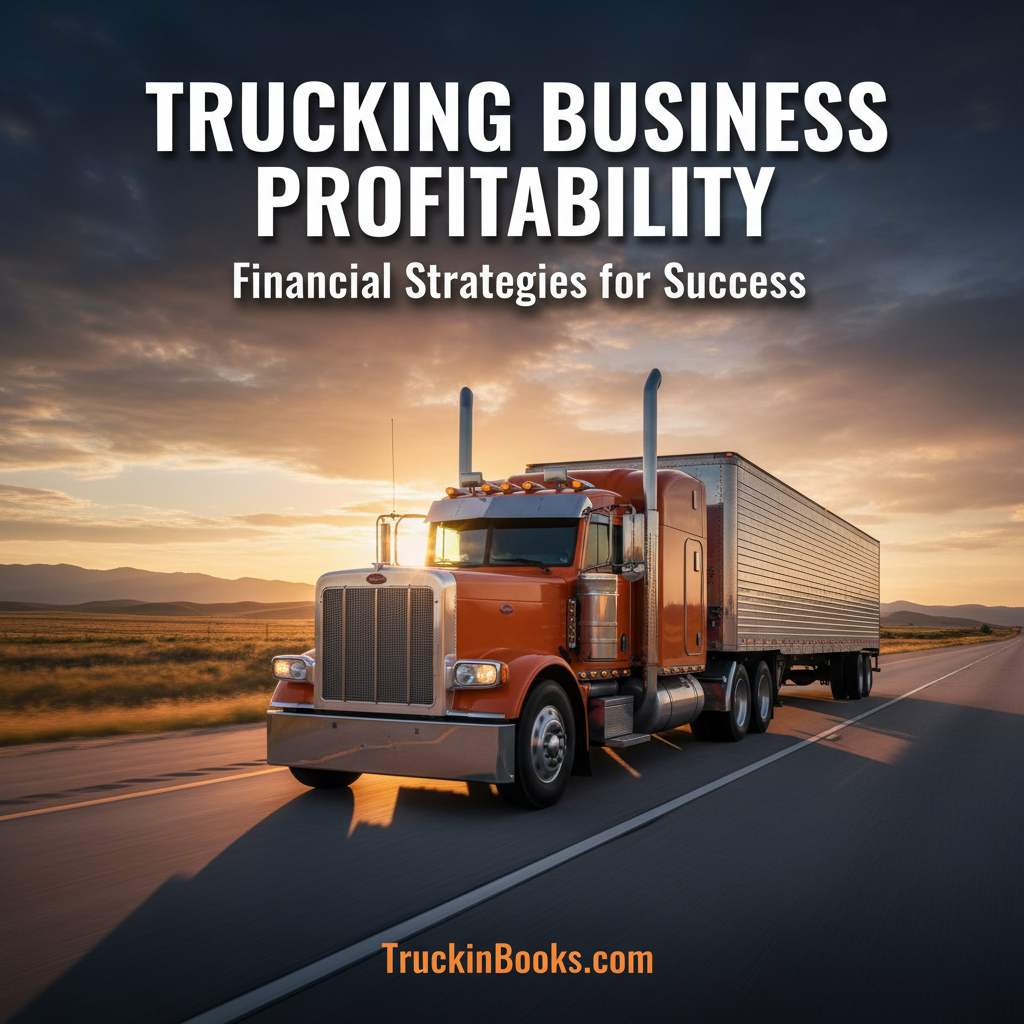
Protected
Fleet Owners & Company Management
Trucking Business Profitability: Financial Strategies for Success
Audio
DRM
By TruckinBooks
139 pages
3 min
Advanced financial management strategies for trucking company owners to maximize profitability and build sustainable businesses.
About This Ebook
Trucking Business Profitability: Financial Strategies for Success
Chapter 1: Understanding Trucking Economics
Trucking operates on thin margins, making financial management critical to success. Understanding the economic fundamentals of trucking helps you make better decisions and identify opportunities for improvement.
Revenue in trucking comes primarily from hauling freight, measured in revenue per mile or revenue per load. Maximizing revenue requires finding profitable freight, minimizing empty miles, and maintaining high utilization.
Costs in trucking are substantial and varied. Fuel, driver pay, equipment costs, insurance, and maintenance represent major expense categories. Controlling costs while maintaining service quality is the ongoing challenge of trucking management.
Chapter 2: Cost Analysis and Control
Knowing your costs in detail is fundamental to profitability. Track costs by category, by truck, and by lane. This granular understanding reveals where money is made and lost.
Cost per mile is a key metric. Calculate your total costs divided by total miles to understand your baseline. Compare this to revenue per mile to assess profitability.
Variable costs change with miles driven. Fuel and maintenance are primarily variable costs. Fixed costs remain constant regardless of miles. Understanding this distinction helps with pricing and planning.
Chapter 3: Revenue Optimization
Revenue optimization starts with rate management. Understand market rates for your lanes and equipment type. Price your services to cover costs plus desired profit margin.
Minimizing empty miles directly improves profitability. Every mile driven without revenue is pure cost. Invest effort in finding backhaul freight and optimizing routes.
Customer mix affects revenue stability and quality. Dedicated customers provide predictable revenue; spot market provides flexibility. Balance your mix based on your priorities.
Chapter 4: Driver Compensation Strategies
Driver pay is typically the largest expense category. Compensation strategies affect both costs and your ability to attract and retain drivers.
Pay structures vary widely in trucking. Cents per mile, percentage of revenue, hourly pay, and salary all have proponents. Each structure creates different incentives and has different cost implications.
Total compensation includes benefits, home time, and working conditions. Drivers evaluate the complete package, not just pay rate. Competitive total compensation supports recruitment and retention.
Chapter 5: Equipment Economics
Equipment decisions significantly impact profitability. Purchase price, operating costs, and resale value all affect the economics of truck ownership.
Fuel efficiency varies significantly between trucks. Newer trucks typically achieve better mileage, but the fuel savings must be weighed against higher purchase costs.
Maintenance costs increase with truck age and mileage. At some point, replacement becomes more economical than continued repairs. Analyze lifecycle costs to optimize replacement timing.
Chapter 6: Cash Flow Management
Cash flow challenges are common in trucking due to the gap between incurring expenses and receiving payment. Managing this gap is essential for business survival.
Accounts receivable management affects cash flow directly. Invoice promptly, follow up on overdue accounts, and consider factoring for immediate cash when needed.
Expense timing can be managed to some degree. Negotiate payment terms with vendors, time major purchases strategically, and maintain cash reserves for unexpected needs.
Chapter 7: Financial Planning and Budgeting
Budgets provide roadmaps for financial performance. Develop annual budgets projecting revenue, expenses, and profitability. Compare actual results to budget regularly.
Scenario planning prepares you for different market conditions. What happens if rates drop 10%? If fuel prices spike? Having plans for various scenarios enables faster response when conditions change.
Capital planning addresses equipment replacement, growth investments, and major expenditures. Plan major capital needs in advance to ensure financing is available.
Chapter 8: Tax Strategies
Tax planning can significantly affect profitability. Work with accountants who understand trucking to optimize your tax position.
Depreciation strategies affect both taxes and financial statements. Section 179 deductions and bonus depreciation can accelerate tax benefits from equipment purchases.
Business structure affects taxation. Sole proprietorships, LLCs, S-corps, and C-corps all have different tax implications. Ensure your structure is optimal for your situation.
Chapter 9: Financial Metrics and KPIs
Key performance indicators (KPIs) help you monitor business health. Revenue per truck, cost per mile, operating ratio, and other metrics provide insight into performance.
Benchmarking against industry standards reveals how you compare to peers. Industry associations and publications provide benchmark data for comparison.
Trend analysis shows whether you're improving or declining over time. Track key metrics monthly and annually to identify trends requiring attention.
Chapter 10: Building Long-Term Value
Profitability enables long-term value creation. Consistent profits build equity, fund growth, and create options for the future.
Business value depends on more than current profits. Sustainable competitive advantages, customer relationships, and operational systems all contribute to value.
Exit planning should inform current decisions. Whether you plan to sell, transfer to family, or operate indefinitely, your plans affect how you should manage the business today.
Financial success in trucking requires attention to both revenue and costs, careful cash flow management, and strategic planning. By mastering these financial fundamentals, you can build a profitable trucking business that provides value for years to come.
Chapter 1: Understanding Trucking Economics
Trucking operates on thin margins, making financial management critical to success. Understanding the economic fundamentals of trucking helps you make better decisions and identify opportunities for improvement.
Revenue in trucking comes primarily from hauling freight, measured in revenue per mile or revenue per load. Maximizing revenue requires finding profitable freight, minimizing empty miles, and maintaining high utilization.
Costs in trucking are substantial and varied. Fuel, driver pay, equipment costs, insurance, and maintenance represent major expense categories. Controlling costs while maintaining service quality is the ongoing challenge of trucking management.
Chapter 2: Cost Analysis and Control
Knowing your costs in detail is fundamental to profitability. Track costs by category, by truck, and by lane. This granular understanding reveals where money is made and lost.
Cost per mile is a key metric. Calculate your total costs divided by total miles to understand your baseline. Compare this to revenue per mile to assess profitability.
Variable costs change with miles driven. Fuel and maintenance are primarily variable costs. Fixed costs remain constant regardless of miles. Understanding this distinction helps with pricing and planning.
Chapter 3: Revenue Optimization
Revenue optimization starts with rate management. Understand market rates for your lanes and equipment type. Price your services to cover costs plus desired profit margin.
Minimizing empty miles directly improves profitability. Every mile driven without revenue is pure cost. Invest effort in finding backhaul freight and optimizing routes.
Customer mix affects revenue stability and quality. Dedicated customers provide predictable revenue; spot market provides flexibility. Balance your mix based on your priorities.
Chapter 4: Driver Compensation Strategies
Driver pay is typically the largest expense category. Compensation strategies affect both costs and your ability to attract and retain drivers.
Pay structures vary widely in trucking. Cents per mile, percentage of revenue, hourly pay, and salary all have proponents. Each structure creates different incentives and has different cost implications.
Total compensation includes benefits, home time, and working conditions. Drivers evaluate the complete package, not just pay rate. Competitive total compensation supports recruitment and retention.
Chapter 5: Equipment Economics
Equipment decisions significantly impact profitability. Purchase price, operating costs, and resale value all affect the economics of truck ownership.
Fuel efficiency varies significantly between trucks. Newer trucks typically achieve better mileage, but the fuel savings must be weighed against higher purchase costs.
Maintenance costs increase with truck age and mileage. At some point, replacement becomes more economical than continued repairs. Analyze lifecycle costs to optimize replacement timing.
Chapter 6: Cash Flow Management
Cash flow challenges are common in trucking due to the gap between incurring expenses and receiving payment. Managing this gap is essential for business survival.
Accounts receivable management affects cash flow directly. Invoice promptly, follow up on overdue accounts, and consider factoring for immediate cash when needed.
Expense timing can be managed to some degree. Negotiate payment terms with vendors, time major purchases strategically, and maintain cash reserves for unexpected needs.
Chapter 7: Financial Planning and Budgeting
Budgets provide roadmaps for financial performance. Develop annual budgets projecting revenue, expenses, and profitability. Compare actual results to budget regularly.
Scenario planning prepares you for different market conditions. What happens if rates drop 10%? If fuel prices spike? Having plans for various scenarios enables faster response when conditions change.
Capital planning addresses equipment replacement, growth investments, and major expenditures. Plan major capital needs in advance to ensure financing is available.
Chapter 8: Tax Strategies
Tax planning can significantly affect profitability. Work with accountants who understand trucking to optimize your tax position.
Depreciation strategies affect both taxes and financial statements. Section 179 deductions and bonus depreciation can accelerate tax benefits from equipment purchases.
Business structure affects taxation. Sole proprietorships, LLCs, S-corps, and C-corps all have different tax implications. Ensure your structure is optimal for your situation.
Chapter 9: Financial Metrics and KPIs
Key performance indicators (KPIs) help you monitor business health. Revenue per truck, cost per mile, operating ratio, and other metrics provide insight into performance.
Benchmarking against industry standards reveals how you compare to peers. Industry associations and publications provide benchmark data for comparison.
Trend analysis shows whether you're improving or declining over time. Track key metrics monthly and annually to identify trends requiring attention.
Chapter 10: Building Long-Term Value
Profitability enables long-term value creation. Consistent profits build equity, fund growth, and create options for the future.
Business value depends on more than current profits. Sustainable competitive advantages, customer relationships, and operational systems all contribute to value.
Exit planning should inform current decisions. Whether you plan to sell, transfer to family, or operate indefinitely, your plans affect how you should manage the business today.
Financial success in trucking requires attention to both revenue and costs, careful cash flow management, and strategic planning. By mastering these financial fundamentals, you can build a profitable trucking business that provides value for years to come.
Content Protection
This ebook is protected with DRM technology. View only through our secure web reader. No downloading or copying allowed to protect author rights.
Details
Format
Web Reader
Pages
139
Audio
3 min
Access
Lifetime
Related Ebooks

© 2026 TruckinBooks. All rights reserved.
Get Full Access to This Ebook
Unlock this ebook and 200+ more trucking industry resources with lifetime access. 30-day money-back guarantee.
Get Instant Access - $97