
Protected
Fleet Owners & Company Management
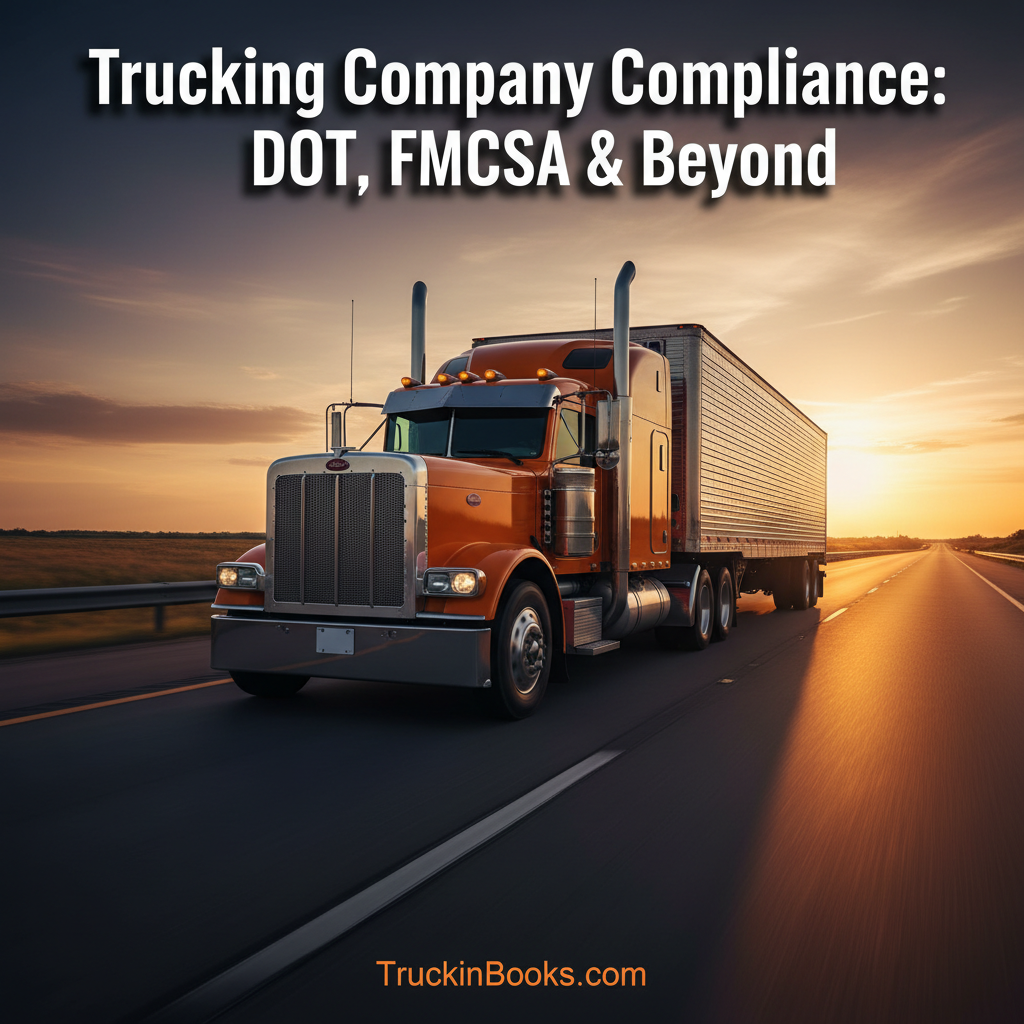
Trucking Company Compliance: DOT, FMCSA & Beyond
Audio
DRM
By TruckinBooks
133 pages
3 min
Complete compliance guide for trucking company owners covering DOT regulations, FMCSA requirements, and audit preparation.
About This Ebook
Trucking Company Compliance: DOT, FMCSA & Beyond
Chapter 1: The Compliance Landscape
Operating a trucking company requires compliance with numerous federal, state, and local regulations. The Department of Transportation (DOT) and Federal Motor Carrier Safety Administration (FMCSA) establish most federal requirements, but state regulations add additional layers.
Non-compliance carries serious consequences. Fines, out-of-service orders, and even criminal penalties can result from violations. Beyond legal consequences, non-compliance increases accident risk and can damage your reputation with customers and insurers.
This guide provides an overview of major compliance requirements for trucking companies. While not exhaustive, it covers the fundamental areas that every trucking company must address.
Chapter 2: Operating Authority and Registration
Before operating commercially, you must obtain proper authority from FMCSA. Motor carrier authority (MC number) authorizes for-hire transportation. USDOT numbers are required for all commercial motor vehicles in interstate commerce.
The Unified Carrier Registration (UCR) program requires annual registration and fee payment for motor carriers operating interstate. Fees are based on fleet size.
State requirements vary. Some states require additional permits or registrations. Research requirements for states where you operate.
Chapter 3: Driver Qualification Requirements
FMCSA establishes minimum qualifications for commercial drivers. Drivers must hold valid CDLs with appropriate endorsements, meet medical certification requirements, and pass background checks.
Driver qualification files must be maintained for each driver. Required documents include application, driving record, medical certificate, road test certification, and annual review of driving record.
Medical certification requirements include examinations by certified medical examiners. Drivers must carry valid medical certificates, and carriers must verify certification status.
Chapter 4: Hours of Service Compliance
Hours of service (HOS) regulations limit driving and on-duty time to prevent fatigue-related accidents. Current rules include 11-hour driving limits, 14-hour on-duty limits, and required rest periods.
Electronic logging devices (ELDs) are required for most commercial drivers to record HOS. ELDs must be registered with FMCSA and meet technical specifications.
HOS violations are among the most common compliance issues. Ensure drivers understand the rules and that your operations allow compliance. Pressuring drivers to violate HOS is illegal.
Chapter 5: Vehicle Maintenance Requirements
Systematic maintenance programs are required for commercial motor vehicles. Regulations require regular inspections, repairs, and maintenance to ensure safe operation.
Driver vehicle inspection reports (DVIRs) must be completed at the end of each driving day. Drivers report any defects or deficiencies. Carriers must repair safety-related defects before the vehicle is operated again.
Annual inspections by qualified inspectors are required. Inspection reports must be retained and available for review.
Chapter 6: Drug and Alcohol Testing
DOT drug and alcohol testing requirements apply to all CDL holders performing safety-sensitive functions. Required tests include pre-employment, random, post-accident, reasonable suspicion, return-to-duty, and follow-up testing.
Carriers must have written drug and alcohol policies and testing programs. Consortium membership can simplify compliance for smaller carriers.
Clearinghouse registration is required for carriers and drivers. The Clearinghouse database tracks drug and alcohol violations across the industry.
Chapter 7: Insurance Requirements
Minimum insurance levels are required for motor carriers. For-hire carriers transporting general freight need at least $750,000 in liability coverage. Higher minimums apply for certain cargo types.
Proof of insurance must be filed with FMCSA. Form BMC-91 or BMC-91X demonstrates insurance coverage. Operating without proper insurance filings is illegal.
Cargo insurance, while not federally required for carriers, is often required by customers and is prudent business practice.
Chapter 8: Hazardous Materials Compliance
Transporting hazardous materials requires additional compliance measures. Drivers need hazmat endorsements, which require background checks and written tests.
Hazmat shipping papers, placarding, and emergency response information requirements apply to hazmat shipments. Training requirements apply to all employees involved in hazmat transportation.
Security plans are required for certain hazmat quantities. Plans must address personnel security, unauthorized access, and en route security.
Chapter 9: Audit Preparation
FMCSA conducts compliance reviews and audits of motor carriers. Being prepared for audits reduces stress and improves outcomes.
Maintain organized records that can be produced quickly. Auditors request specific documents; having them readily available demonstrates good management.
New entrant safety audits are required within the first 18 months of operation. Passing this audit is required to maintain operating authority.
Chapter 10: Building a Compliance Culture
Compliance should be embedded in your company culture, not treated as an afterthought. When everyone understands the importance of compliance, violations are less likely.
Training ensures employees understand requirements. Regular training updates keep compliance knowledge current as regulations change.
Self-audits identify problems before regulators do. Regularly review your compliance status and address deficiencies proactively.
Compliance is not optional in trucking. Building robust compliance systems protects your company from penalties, reduces accident risk, and demonstrates professionalism to customers and partners. Invest the time and resources necessary to maintain full compliance with all applicable regulations.
Chapter 1: The Compliance Landscape
Operating a trucking company requires compliance with numerous federal, state, and local regulations. The Department of Transportation (DOT) and Federal Motor Carrier Safety Administration (FMCSA) establish most federal requirements, but state regulations add additional layers.
Non-compliance carries serious consequences. Fines, out-of-service orders, and even criminal penalties can result from violations. Beyond legal consequences, non-compliance increases accident risk and can damage your reputation with customers and insurers.
This guide provides an overview of major compliance requirements for trucking companies. While not exhaustive, it covers the fundamental areas that every trucking company must address.
Chapter 2: Operating Authority and Registration
Before operating commercially, you must obtain proper authority from FMCSA. Motor carrier authority (MC number) authorizes for-hire transportation. USDOT numbers are required for all commercial motor vehicles in interstate commerce.
The Unified Carrier Registration (UCR) program requires annual registration and fee payment for motor carriers operating interstate. Fees are based on fleet size.
State requirements vary. Some states require additional permits or registrations. Research requirements for states where you operate.
Chapter 3: Driver Qualification Requirements
FMCSA establishes minimum qualifications for commercial drivers. Drivers must hold valid CDLs with appropriate endorsements, meet medical certification requirements, and pass background checks.
Driver qualification files must be maintained for each driver. Required documents include application, driving record, medical certificate, road test certification, and annual review of driving record.
Medical certification requirements include examinations by certified medical examiners. Drivers must carry valid medical certificates, and carriers must verify certification status.
Chapter 4: Hours of Service Compliance
Hours of service (HOS) regulations limit driving and on-duty time to prevent fatigue-related accidents. Current rules include 11-hour driving limits, 14-hour on-duty limits, and required rest periods.
Electronic logging devices (ELDs) are required for most commercial drivers to record HOS. ELDs must be registered with FMCSA and meet technical specifications.
HOS violations are among the most common compliance issues. Ensure drivers understand the rules and that your operations allow compliance. Pressuring drivers to violate HOS is illegal.
Chapter 5: Vehicle Maintenance Requirements
Systematic maintenance programs are required for commercial motor vehicles. Regulations require regular inspections, repairs, and maintenance to ensure safe operation.
Driver vehicle inspection reports (DVIRs) must be completed at the end of each driving day. Drivers report any defects or deficiencies. Carriers must repair safety-related defects before the vehicle is operated again.
Annual inspections by qualified inspectors are required. Inspection reports must be retained and available for review.
Chapter 6: Drug and Alcohol Testing
DOT drug and alcohol testing requirements apply to all CDL holders performing safety-sensitive functions. Required tests include pre-employment, random, post-accident, reasonable suspicion, return-to-duty, and follow-up testing.
Carriers must have written drug and alcohol policies and testing programs. Consortium membership can simplify compliance for smaller carriers.
Clearinghouse registration is required for carriers and drivers. The Clearinghouse database tracks drug and alcohol violations across the industry.
Chapter 7: Insurance Requirements
Minimum insurance levels are required for motor carriers. For-hire carriers transporting general freight need at least $750,000 in liability coverage. Higher minimums apply for certain cargo types.
Proof of insurance must be filed with FMCSA. Form BMC-91 or BMC-91X demonstrates insurance coverage. Operating without proper insurance filings is illegal.
Cargo insurance, while not federally required for carriers, is often required by customers and is prudent business practice.
Chapter 8: Hazardous Materials Compliance
Transporting hazardous materials requires additional compliance measures. Drivers need hazmat endorsements, which require background checks and written tests.
Hazmat shipping papers, placarding, and emergency response information requirements apply to hazmat shipments. Training requirements apply to all employees involved in hazmat transportation.
Security plans are required for certain hazmat quantities. Plans must address personnel security, unauthorized access, and en route security.
Chapter 9: Audit Preparation
FMCSA conducts compliance reviews and audits of motor carriers. Being prepared for audits reduces stress and improves outcomes.
Maintain organized records that can be produced quickly. Auditors request specific documents; having them readily available demonstrates good management.
New entrant safety audits are required within the first 18 months of operation. Passing this audit is required to maintain operating authority.
Chapter 10: Building a Compliance Culture
Compliance should be embedded in your company culture, not treated as an afterthought. When everyone understands the importance of compliance, violations are less likely.
Training ensures employees understand requirements. Regular training updates keep compliance knowledge current as regulations change.
Self-audits identify problems before regulators do. Regularly review your compliance status and address deficiencies proactively.
Compliance is not optional in trucking. Building robust compliance systems protects your company from penalties, reduces accident risk, and demonstrates professionalism to customers and partners. Invest the time and resources necessary to maintain full compliance with all applicable regulations.
Content Protection
This ebook is protected with DRM technology. View only through our secure web reader. No downloading or copying allowed to protect author rights.
Details
Format
Web Reader
Pages
133
Audio
3 min
Access
Lifetime
Related Ebooks




© 2026 TruckinBooks. All rights reserved.
Get Full Access to This Ebook
Unlock this ebook and 200+ more trucking industry resources with lifetime access. 30-day money-back guarantee.
Get Instant Access - $97